Insights
How Digital Fueling Prevents Aircraft Overfueling

Suraj Singh
Marketing Director, i6 Group

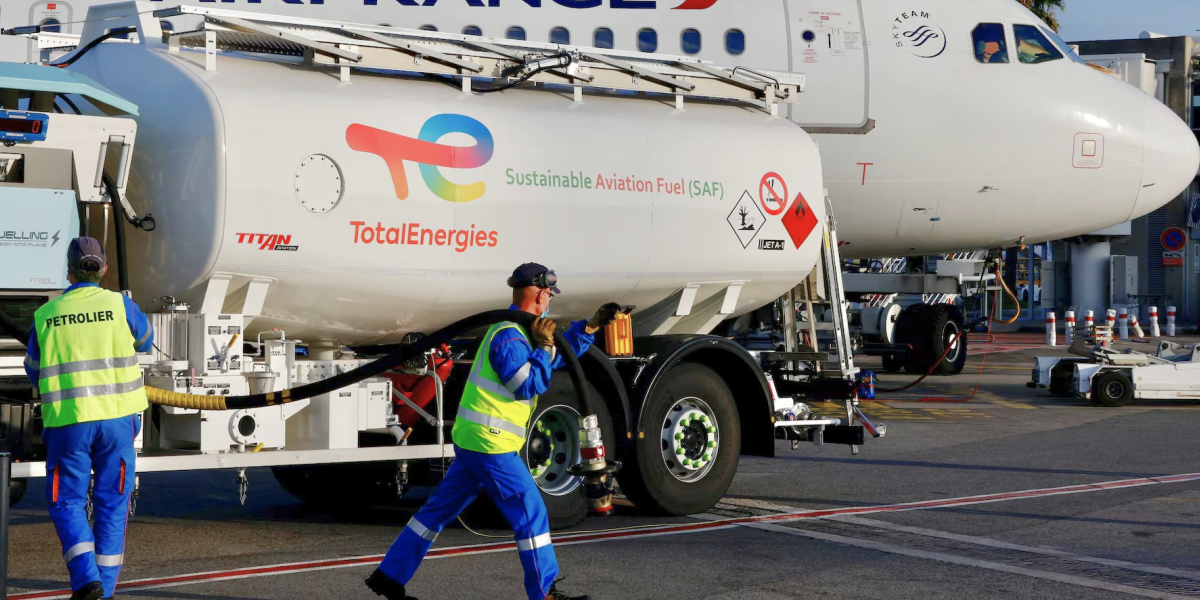
Digital fueling prevents overfueling by putting the requested figure, the live uplift and a two-sided confirmation in front of both the flight crew and the fueler before fueling finishes. Mismatches are caught on the stand, while they can still be fixed, not discovered later in reconciliation. What it takes:
Most extra fuel is not an accident. Airlines carry contingency and alternate fuel by regulation, captains add their own discretionary fuel for weather, holding or a tight destination, and some flights deliberately tanker, loading cheap fuel at one station to avoid buying expensive fuel at the next. Those are judgment calls, and they belong to the crew. The catch is that fuel is not free to carry: every extra kilo has to be flown, and flying it burns more of it, so padding always has a price.
The overfueling worth chasing is the avoidable kind: the gap between the figure the flight actually needs and the figure that ends up in the tanks. An order set early and never trimmed. A pre-fuel that no longer matches the final plan. A volume-to-mass conversion that rounds the wrong way as fuel temperature shifts. Or simply more loaded than was agreed, because the number was handed over on paper and nobody could adjust it at the aircraft. That drift, between what was needed, what was ordered and what was actually pumped, is what digital confirmation goes after. It does not touch the crew's contingency call; it closes the gap around it.
.webp)
Strip away the money for a second, because the real issue is knowing your numbers. Overfueling is what it looks like when the figure the flight needs, the figure that was ordered, and the figure actually pumped are allowed to drift apart unseen. Close that gap, and give every station the same real-time view, and the excess has nowhere to hide. Ryanair frames its own push this way: digitalization lets it trim excess fuel, in Steven Fitzgerald's words, "in a much more efficient and controlled way than has been possible in the past."
The cost and the carbon follow from the accuracy, not the other way round. Fuel is the biggest line in the budget and every unnecessary kilo is flown and burned, so tighter numbers do save real money and real CO2, more so as ETS and SAF costs climb. But the win airlines talk about first is control and confidence: the figure is right before the doors close, and they can prove it afterward.
--------------------------
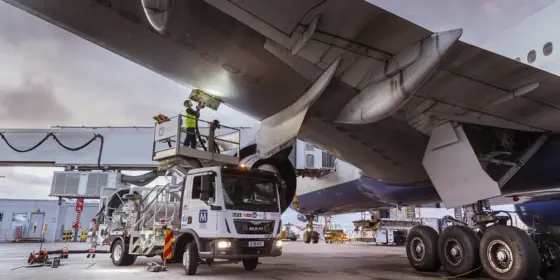
Digital confirmation closes the gap by keeping the order live and shared. The crew sees the requested figure and the uplift in real time, and can amend the order during the refuel if a more efficient amount is calculated. Nothing is committed until both the crew and the fueler agree the final grade and quantity. At North Air, airlines adjust the fuel figure mid-refuel exactly this way, and real-time fuel-usage data keeps the uplift matched to what the flight needs, so overfueling is minimized rather than discovered after the fact.
.webp)
--------------------------
The clearest read comes from Menzies at London Gatwick. Putting i6 on the stand cut fuel-on-board (FOB) error there ninefold, which takes around 423 litres of unnecessary fuel off the average flight, worth north of $400 a flight to Menzies' airline customers at recent fuel prices. Better data in, less waste out.
--------------------------
Prevention is only half of it. Every confirmed uplift is captured digitally and timestamped, so the picture builds over time: an airline can see which stations run tight and which drift, and fix the outliers, rather than piecing it together after the fact. That is the deeper value of going digital, and the airlines that have done it say so. JetBlue, which moved its fueling onto i6, put it plainly: digitizing fueling has "a massive impact on cost, productivity, accuracy, and transparency." Get the number right on the stand, and every figure downstream, from reconciliation to the emissions report, is right too.
--------------------------
Airports, suppliers, and into-plane teams around the world are already modernizing their fuel operations with scalable digital tools. Maybe you have not explored what this could look like for your own site yet.
If you want to understand how real-time data, paperless workflows, and connected operations can improve resilience and sustainability, you can review our case studies and learn how similar operations have made the shift.
→ Explore real-world deployments and discover what digital fuel management could mean for your operation.