Insights
What Evidencing SAF Actually Requires

Suraj Singh
Marketing Director, i6 Group

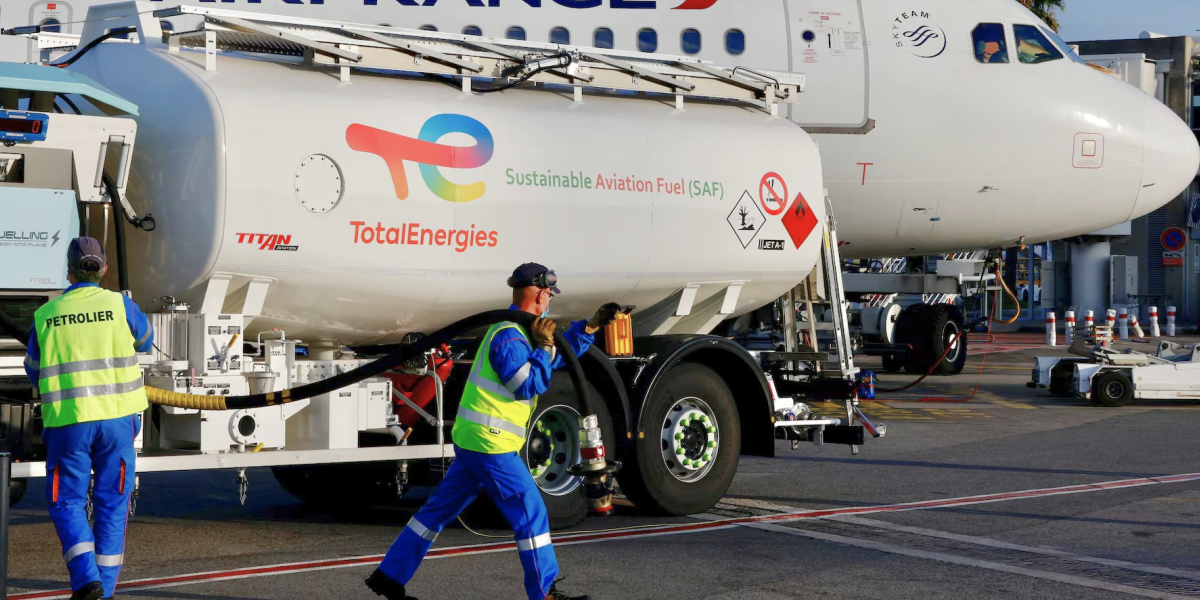
Sustainable Aviation Fuel, or the sustainable fuel element is a hot topic. Everyone's chasing an SAF percentage. Almost no one can prove the one they report is accurate.
That gap between the number stated and the number defensible is about to become the most important thing in SAF reporting.
For years, hitting the mandate meant blending a percentage, recording it, and submitting the figure. The figure was the deliverable. But that era is ending, because a mandate was never really about the number, it was about proving the fuel someone paid a premium for genuinely cut emissions.
The percentage is shorthand for a physical claim, and physical claims have to hold up.
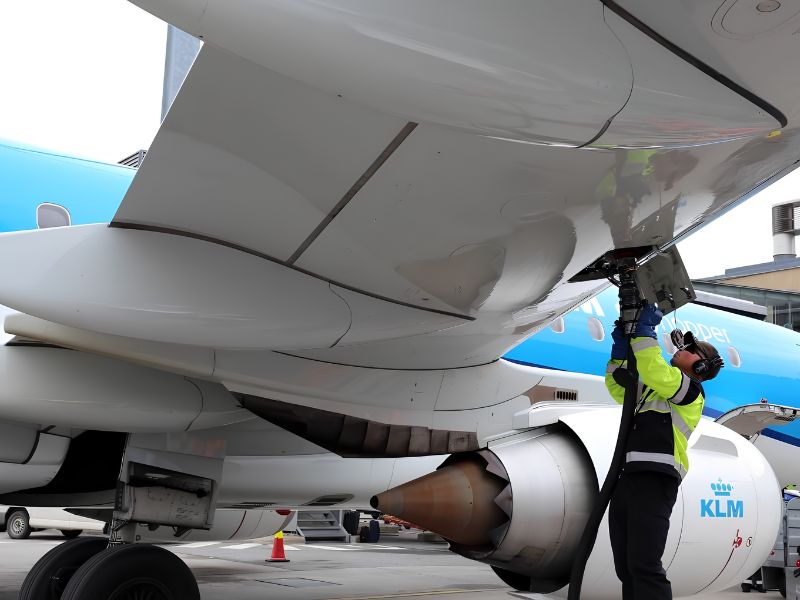
Right now, most SAF claims are hard to defend, because a single delivery's data scatters across five places and belongs to none of them:
- What arrived, where. Fuel farm reports emailed separately, consolidated by hand, up to 60 days behind.
- Which certificate, which delivery. Proof of sustainability lands over email, unlinked to the delivery in real time.
- Committed versus delivered. Contracts sit in procurement, deliveries sit in ops, and uplifts without a matching contract slip through the gap.
- What went on the aircraft. Fueller tickets often carry no sustainable element percentage, so the blend at uplift goes unrecorded.
- The balance that goes negative. Sites go negative on book stock when physical SAF runs short, and nobody sees it until month-end.
This isn't poor operations. It's a process that grew one workaround at a time, faster than the systems beneath it. But it means the industry's answer to "prove it" is a year-end reconciliation stitched from scattered inboxes, and that’s just not sustainable.
--------------------------
Here's the detail that gives the whole problem away. The blend is known the instant fuel is delivered. The proof of it – the certificate, the pathway – can take up to 60 days to arrive. For those weeks, the physical fuel and its evidence live completely apart, and someone matches a week-eight certificate to a week-one delivery by hand.
That's survivable at 2% SAF requirement. It won't be for long. Under the UK SAF Mandate, required sustainable volume rises from 2% of jet fuel in 2025 to 10% by 2030 and 22% by 2040 on a fuel carrying a real premium.
At 2%, a tracking inefficiency is a rounding error. At 22%, it compounds into margin. Evidence stops just being a compliance concern and becomes a commercial one.

--------------------------
The part the industry’s still catching up to: Evidencing your sustainable element isn't about reporting a better number, it's about carrying one number's whole lineage, unbroken, from contract to wing. One continuous record instead of five disconnected piles, through six stages that each feed the next:
The power isn't in any one stage. It's that each links to the next, so one figure carries its whole story. Ask which contract set the percentage, which order matched it, which certificate proved it, and the answer is one record, not five inboxes. The winners here won't be whoever reports the most SAF, they'll be whoever can defend every molecule without trying.
Two things make that record trustworthy: capture at the source, not the wing, so everything downstream inherits clean data – and certificates that self-file against the delivery the moment they land, instead of doing it manually.
--------------------------
Suppliers own the SAF breakdown and issue the certificates. That makes them the anchor of the entire chain – the point the whole industry's evidence flows from.
When supplier data lands in a connected record, the friction disappears downstream too: fuel farms balance stock accurately, into-plane operators report uplift across dozens of airlines, and airlines can finally tie the premium they paid to the fuel that reached the aircraft.
Same certificate you issue today – the only thing that changes is where it lands.
--------------------------
Compliance reporting for CORSIA, EU ETS and the UK SAF Mandate is moving toward continuous, real-time records, and each cycle sharpens the next. The suppliers building that foundation now will absorb each new rule as a small addition.
The ones still on paper will be reconstructing a molecule's journey after the fact, which will become increasingly difficult as mandates increase.
Get the first step right, and build an operation where defensible is the default, not a year-end scramble.
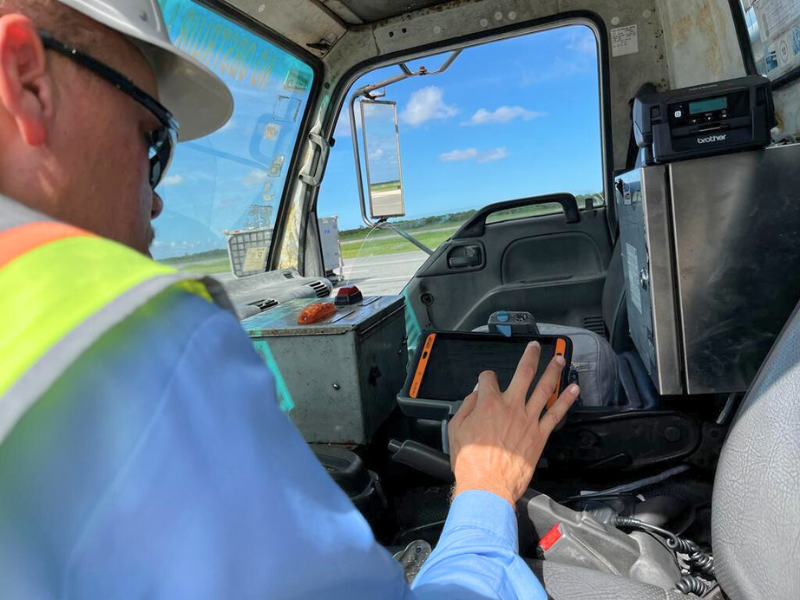
Airports, suppliers, and into-plane teams around the world are already modernizing their fuel operations with scalable digital tools. Maybe you have not explored what this could look like for your own site yet.
If you want to understand how real-time data, paperless workflows, and connected operations can improve resilience and sustainability, you can review our case studies and learn how similar operations have made the shift.
→ Explore real-world deployments and discover what digital fuel management could mean for your operation.



.png)