Insights
How to Reduce Aviation Emissions by 11% Today: The Power of Precision Refueling

Suraj Singh
Marketing Director, i6 Group

%20(1).avif)
A groundbreaking study co-led by the University of Oxford and Linnaeus University has brought fantastic news for the aviation world. It found that airlines could reduce emissions by 11% immediately simply by using their most efficient aircraft more strategically on the routes they already fly. With further systemic change, that reduction could climb to over half.
The best part is that we don't have to wait for "magic" future fuels or electric planes that are many years away. The researchers identified three practical "levers" to make this happen:
.avif)
The team analyzed more than 27 million commercial flights from 2023. This massive project was built on data from industry leaders, including the International Civil Aviation Organization (ICAO), and the International Air Transport Association (IATA).
And the data showed a huge gap in efficiency between different parts of the world, with North America, the Middle East and Central Asia, amongst some of the worst culprits. In contrast, the most efficient regions for flying were Brazil, India, and Southeast Asia.
--------------------------
This research is a brilliant reminder that efficiency is our best tool for change. However, at i6, we’ve noticed there is a fourth lever that often gets left out of the conversation: Precision Refueling.
In the airline world, fuel is the biggest expense, making up about 30% of operating costs. Because current systems are often paper-based and slow, pilots sometimes ask for extra fuel "just in case".
But carrying extra weight is expensive. For every extra tonne of fuel a plane carries, it burns about 30 kg of fuel per hour just to haul that extra weight. We help airlines find that missing efficiency by digitizing the entire fueling process, connecting the fuel farm, the truck, and the pilot in real-time.
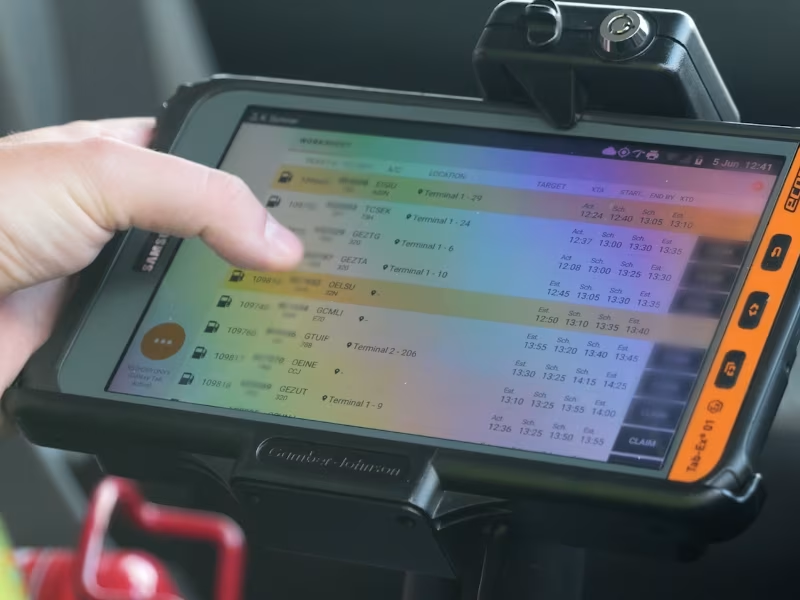
The academic team is right—efficiency is the most powerful tool we’ve to make flying greener today. By adding Precision Refueling as the fourth lever, airlines can save money, reduce CO2, and run a much tighter operation.


.png)
